Wednesday, July 8, 2009

Genius EasyPen and MousePen graphics tablets play on both sides of the fence

Genius, a regular purveyor of cheap and cheerful technology, has today announced a pair of "dual platform" tablets that play nice with both Windows and Mac OS. The EasyPen i405 comes with 28 programmable hot keys, a software bundle, 4 x 5.5-inches of real estate. This is trumped by the MousePen i608, which throws in an optical mouse, a 6 x 8-inches working area and -- best of all -- one more hot key to program. Bargain hunters out there might want to prick up their ears, as the MousePen is already available at Amazon and Newegg. far below its suggested retail price of one Benjamin -- hey, it's no Wacom, but it certainly won't dent the wallet too bad.

Friday, July 3, 2009

Packard Bell imedia lineup gets an Acer-inspired refresh


Packard Bell recently overhauled its logo in an effort to keep up with the times, but are its offerings up to the same task? The new imedia lineup immediately recalls the recently announced M-series desktops from Acer, and that's no accident. The innards are remarkably similar too, with the top models sporting Core 2 Quad or AMD Phenom II X4 processors, a 1.5GB GeForce GT230, HDMI out, Blu-Ray combo drive and a maximum of 8GB DDR3 memory and 1TB of storage. While none of the specs are on the blistering edge of innovation, there's plenty of power there and keen pricing could make them an attractive proposition.

Wednesday, July 1, 2009

Nikon D300

Nikon D300

Just when this Uncrate staffer had set his heart on a Nikon D80, here comes this beast. The Nikon D300 is the company's new entry-level pro dSLR, and it has the features to back up its "pro" claim. Features like a new 51-point auto focus system, a 12.3 megapixel DX sensor, EXPEED Image Processing System, a new 920,000 dot high-resolution 3-inch LCD monitor with LiveView, magnesium alloy construction, and a self-cleaning sensor unit. Of course, if all that's not enough for you, you can always step up to the new Nikon D3 which packs a 12.1 megapixel full-frame sensor, ISO 25,600 (no, that's not a typo), and nine frames per second shooting capabilities, compared to the D300's six.

Apple’s iPhone 3G: Must have Phone


If it ain't broke, don't fix it -- right? We know countless reviews of the iPhone 3GS may begin with that cliché, but there's little chance you'd find a better way to describe the strategy that Apple has just put into play with its latest smartphone. In many ways, the 3GS is a mirror image of the iPhone 3G; externally there's no difference. It's inside where all the changes have happened, with Apple issuing a beefed-up CPU, new internal compass, larger capacities for storage, and improved optics for its camera. More to the point, the release of the 3GS coincides with the launch of iPhone OS 3.0, a major jump from previous versions of the system software featuring highly sought after features like cut, copy, and paste, stereo Bluetooth, MMS, tethering, video recording, landscape keyboard options for more applications, and an iPhone version of Spotlight. At a glance, what Apple seems to be doing is less a reinvention of the wheel and more like retreading the wheel it's already got (and what a wheel, right?). So, do the iPhone 3GS and OS 3.0 tweak the details in just the right places, or has Apple gone and gotten lazy on us?


Hardware:


As we said in the intro, there is nothing visually different about the iPhone 3GS versus the iPhone 3G, save for the lettering on the back, which is now mirrored like the Apple logo. While we had seen leaked images of a matte finish, bezel-free version of the device, when push came to shove, what we got was essentially a carbon copy of the iPhone 3G. In terms of the general elements of the phone -- the plastic casing, mute switch, home and power buttons, etc. -- there is no change at all. In fact, if you were to lay this phone and its predecessor next to one another face up, the new model would be indistinguishable. Of course, the 3GS is not just a clone of the previous device, and Apple has made most of its significant changes inside the phone.

Tuesday, June 30, 2009

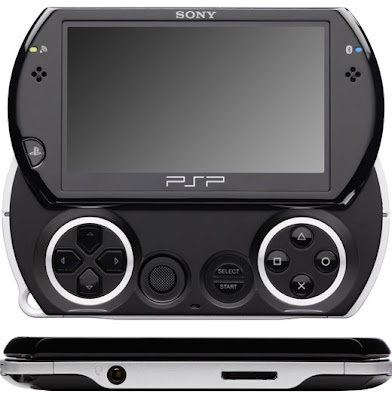
Sony PSP Go Pictures, Video


Introducing the Sony PSP Go: Seems Sony realized that the UMD format was effectively dead; the latest planned incarnation of the Sony PSP only accepts media through Memory Stick Micro cards and wireless downloads (via the PlayStation Network). Bad news for current UMD and normal-sized Memory Stick users.


Yet the focus on digital delivery means that Sony was reportedly thoughtful enough to equip the PSP Go with 16GB of onboard memory. The new slide-down form factor may be something new for longtime PSP users. That’s because controlling the portable console requires the hands to be closer together—and below the Go’s 3.8″ screen. Compare that to the thumbs-on-the-side configuration that has defined every PSP model until now.


Like its predecessors, the PSP Go features WiFi, which as you may know allows wireless multiplayer gaming, access to the PlayStation Network, and limited web browsing. Unlike previous PSPs however, the Go is also Bluetooth-capable, potentially allowing data sharing with other kinds of devices, and of course setting up multiplayer games with nearby PSP Go owners.